Field notes on ticks, yards and homes. Read it in minutes.

Know Your Ticks: The Field Version

Track 01 · 5-minute read

The short version

Ticks are arachnids, kin to spiders and mites. Adults and nymphs have eight legs. Larvae have six. Most bites that cause trouble come from nymphs, and a nymph is about the size of a poppy seed. That's why people miss them.

You don't need a microscope. You need three things: the life stage, the colour pattern on the back, and where you picked it up. With those, you can narrow almost any tick down to a handful of species. And knowing the species tells you what to watch for next.

Not sure? Take a sharp photo and save the tick. Labs and your doctor can work with that.
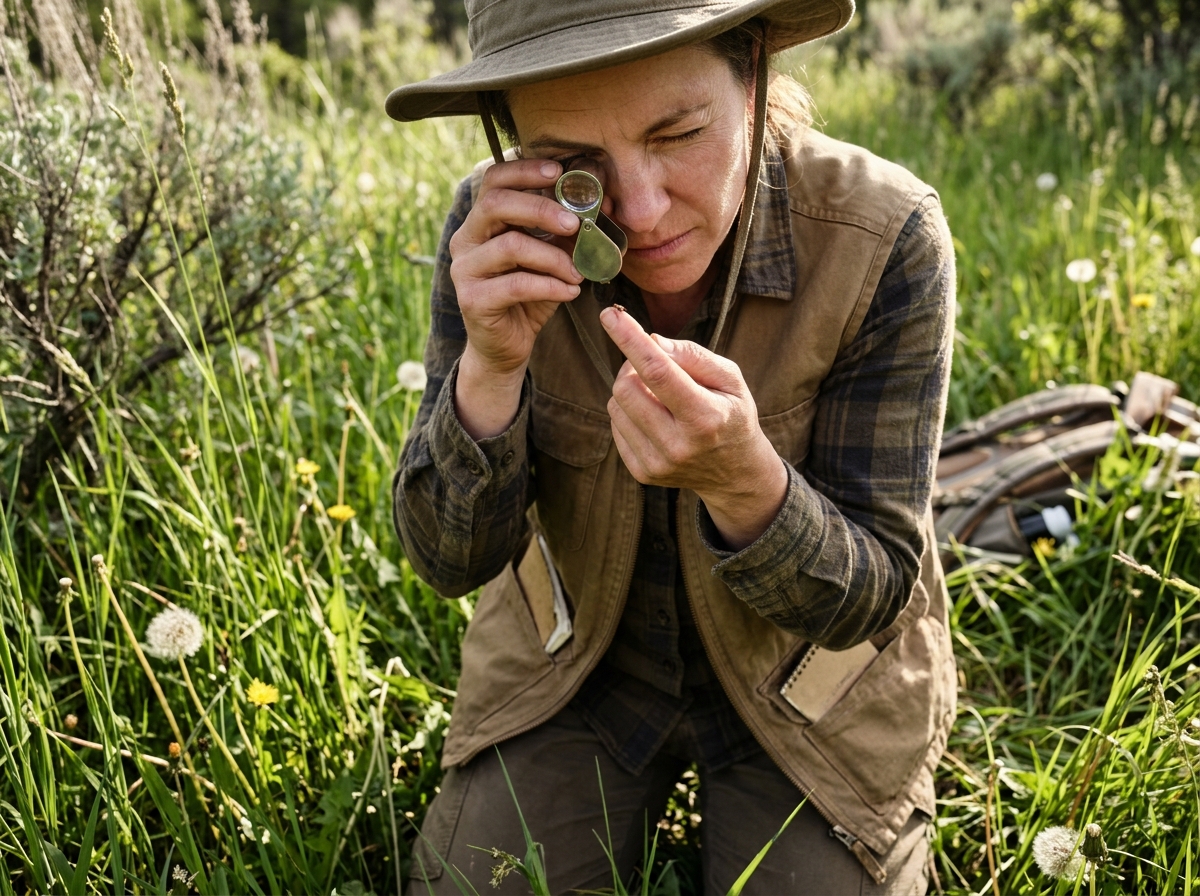
Naturalist kneeling in tall grass, studying a tick on her fingertip through a hand lens

Life cycle in sixty seconds

Hard ticks go through four stages: egg, larva, nymph and adult. Each active stage needs one blood meal to move on. The blacklegged tick often takes two years to finish the loop.

Larvae usually pick up infections from small hosts like white-footed mice. Then they moult into nymphs that can pass those infections on. Adults feed mostly on larger animals, especially deer. That's why deer and mice keep showing up in every tick conversation.

Where they wait

Ticks don't jump. They don't fly. They don't drop from trees. They climb grass tips and low shrubs, hold out their front legs, and wait. Field researchers call it questing.

Hot spots: leaf litter, the edge where lawn meets woods, stone walls, overgrown paths and shady, humid ground. Open, sunny, short lawn is far less friendly to them. Keep that in mind for yard defense.

The usual suspects

These six cover most bites people report in North America and Britain. Ranges are shifting, so treat this as a starting point, not a map.

TickWhereLook forKnown for
Blacklegged / deer tick (Ixodes scapularis)Eastern and upper Midwest US, incl. Hudson ValleyDark legs, black shield; adult female reddish-orange bodyLyme disease, anaplasmosis, babesiosis
Western blacklegged tick (Ixodes pacificus)US Pacific coastSimilar to deer tickLyme disease, anaplasmosis
Sheep / castor bean tick (Ixodes ricinus)UK and Europe, e.g. New Forest, Scottish HighlandsSmall, dark, teardrop shapeLyme disease, tick-borne encephalitis in parts of Europe
Lone Star tick (Amblyomma americanum)Southeast and eastern USFemale has a single white dot on her backEhrlichiosis, alpha-gal syndrome
American dog tick (Dermacentor variabilis)Much of the US east of the RockiesBrown with ornate whitish markingsRocky Mountain spotted fever, tularemia
Brown dog tick (Rhipicephalus sanguineus)WorldwidePlain reddish-brown, no markingsCan live and breed indoors with dogs

Watch list: the Asian longhorned tick (Haemaphysalis longicornis) was first found in the US in New Jersey in 2017 and has spread across many eastern states.

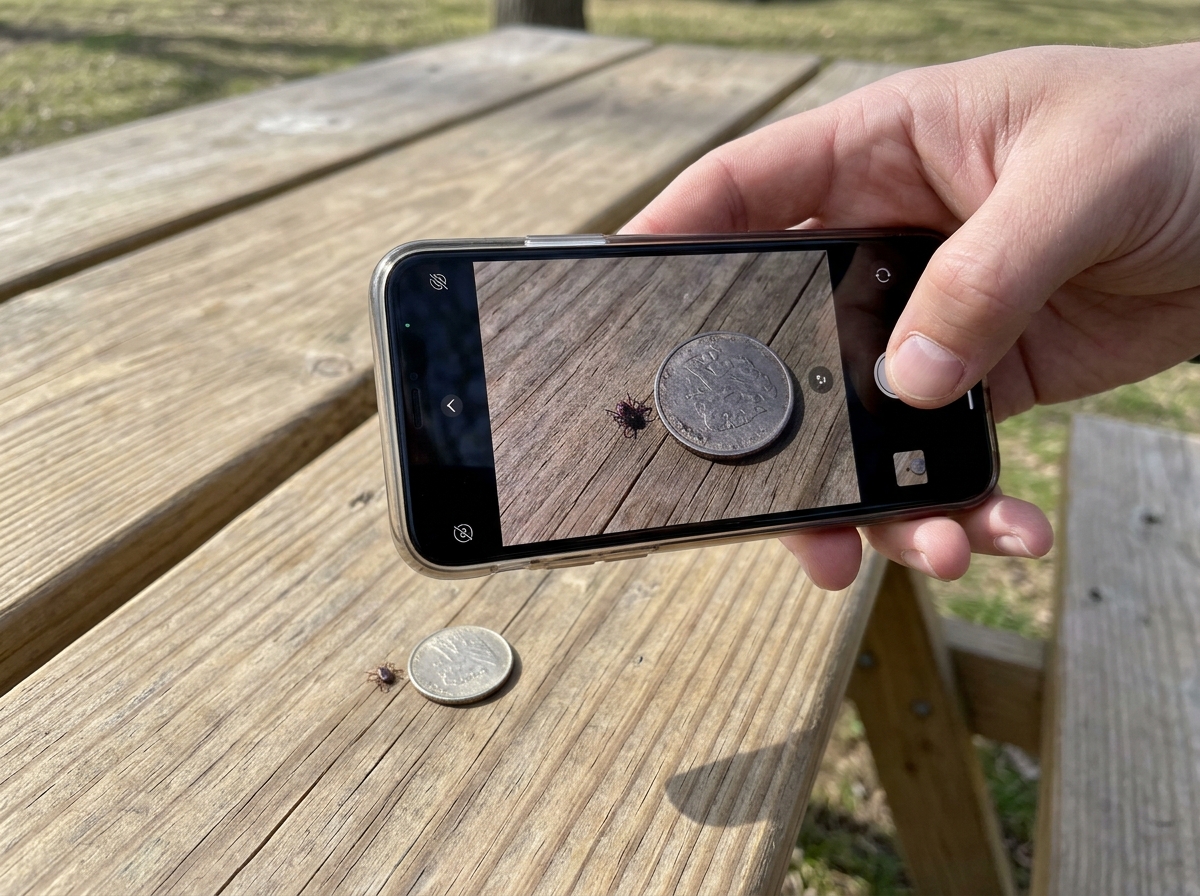
Hand holding a phone to photograph a tick placed beside a coin on a picnic table

Seasons, roughly

Nymphs peak in late spring and early summer. That's the high-risk window for Lyme. Adult blacklegged ticks are busy in autumn and stay active on mild winter days. Lone Star and dog ticks favour spring through summer. Warm winters stretch every one of these windows.

Your ten-second ID kit

  • Clear tape or a small sealed bag to hold the tick.
  • A coin next to it for scale in photos.
  • Your phone camera, close and in daylight.
  • A note: date, place, where on the body.

Upload a photo to the TickEncounter Resource Center at the University of Rhode Island. Their TickSpotters service helps identify ticks from pictures. In the UK, the UK Health Security Agency runs a tick surveillance scheme that accepts specimens.

Bottom line

Learn the shape of a nymph. Learn the white dot of a Lone Star female. Learn that small and dark often means Ixodes. Then move on to the part that protects you: checks and removal. If you've got a dog or cat, head to pets and ticks next.

Pick a Track