Field notes on ticks, yards and homes. Read it in minutes.

Checks & Removal: The Field Version

Track 03 · 5-minute read

The short version

Three moves. Repel before you go out. Check when you come in. Remove fast if you find one. Lyme bacteria usually need the tick attached for more than a day to pass on, so a good evening check is one of the best habits you can build.

This page follows guidance from the CDC and the NHS. It's general information. If you feel unwell after a bite, talk to a doctor.
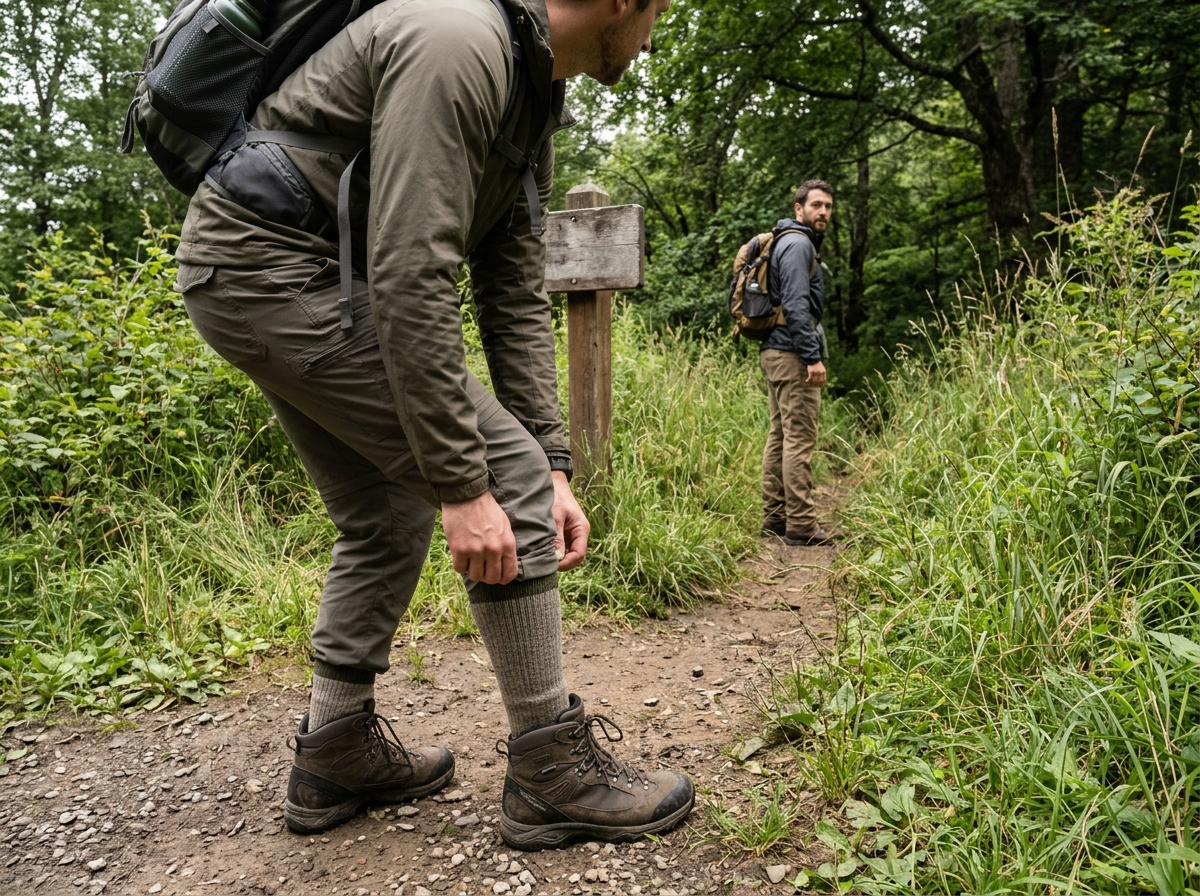
Walker tucking trousers into socks at a trailhead before heading into long grass

Before you go

  • Use an EPA-registered repellent on skin: DEET, picaridin, IR3535 or oil of lemon eucalyptus. Follow the label. Don't use oil of lemon eucalyptus on children under three.
  • Treat boots, socks and trousers with permethrin (0.5%), or buy pre-treated gear. Permethrin goes on fabric, not skin.
  • Wear light colours so ticks show up.
  • Tuck trousers into socks. It looks daft. It works.
  • Walk in the middle of trails. Skip brushing through long grass.

When you get back

  • Check your gear and pets before you go inside.
  • Tumble dry clothes on high heat for 10 minutes to kill ticks on dry clothes. Damp clothes need longer.
  • Shower within two hours of coming indoors. It can wash off unattached ticks and gives you a natural moment to check.

Then do the full-body check. Every time. Even after "just" gardening.

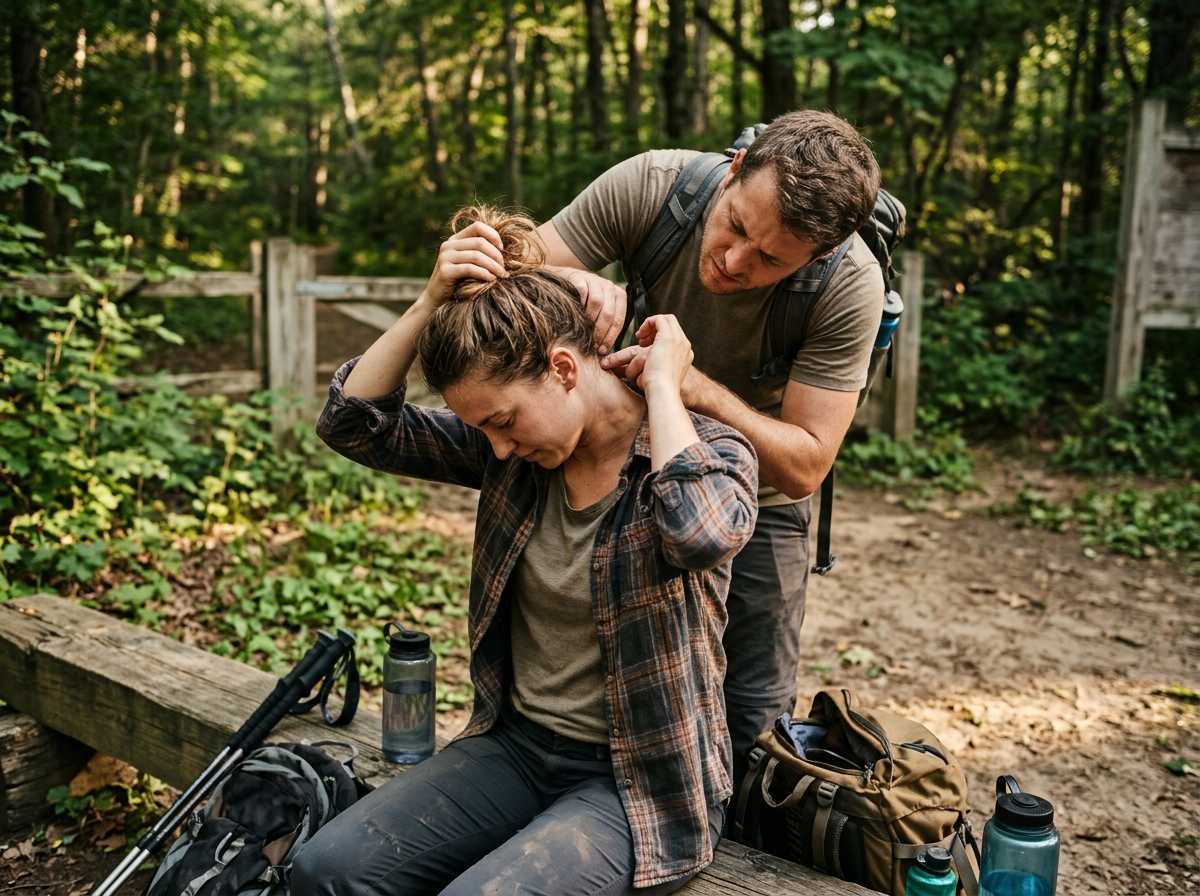
Two friends after a hike checking the backs of each other's necks for ticks

The full-body check

Use a hand mirror or a buddy. Ticks like warm, hidden spots:

  • Under the arms
  • In and around the ears
  • Inside the belly button
  • Backs of the knees
  • In and around the hair
  • Between the legs
  • Around the waist and under straps

Nymphs look like a freckle that moves. Run your fingers through kids' hair, slowly.

Removal, step by step

  1. Grab fine-tipped tweezers or a tick removal tool.
  2. Grasp the tick as close to the skin as you can.
  3. Pull upward with steady, even pressure. Don't twist or jerk.
  4. If mouthparts break off, try to remove them with tweezers. If you can't, leave the area alone and let the skin heal.
  5. Clean the bite and your hands with rubbing alcohol or soap and water.

Don't squeeze the body. Don't use heat, nail polish or petroleum jelly. The goal is to get it off fast, not to make it let go.

Deal with the tick

Don't crush it with your fingers. Put it in a sealed bag or container, wrap it in tape, or flush it. If you want an ID, photograph it next to a coin and note the date and place. See know your ticks for help.

Watch the next 30 days

Note the bite date. Over the next month, look for a red rash that grows, fever, chills, headache, fatigue or aching joints. The classic Lyme rash, erythema migrans, can look like a bull's-eye, but often it's just an expanding red patch. Many people never see a rash at all.

If symptoms show up, see a doctor and mention the bite. In the UK, NHS 111 can help you decide where to go.

The two-minute routine

Repellent on. Socks up. Middle of the trail. Gear in the dryer. Shower. Mirror check. Tweezers ready in the bathroom drawer. That's it. Do it every time and it stops feeling like effort. Got a dog? Add one more stop: the pet check.

Pick a Track